




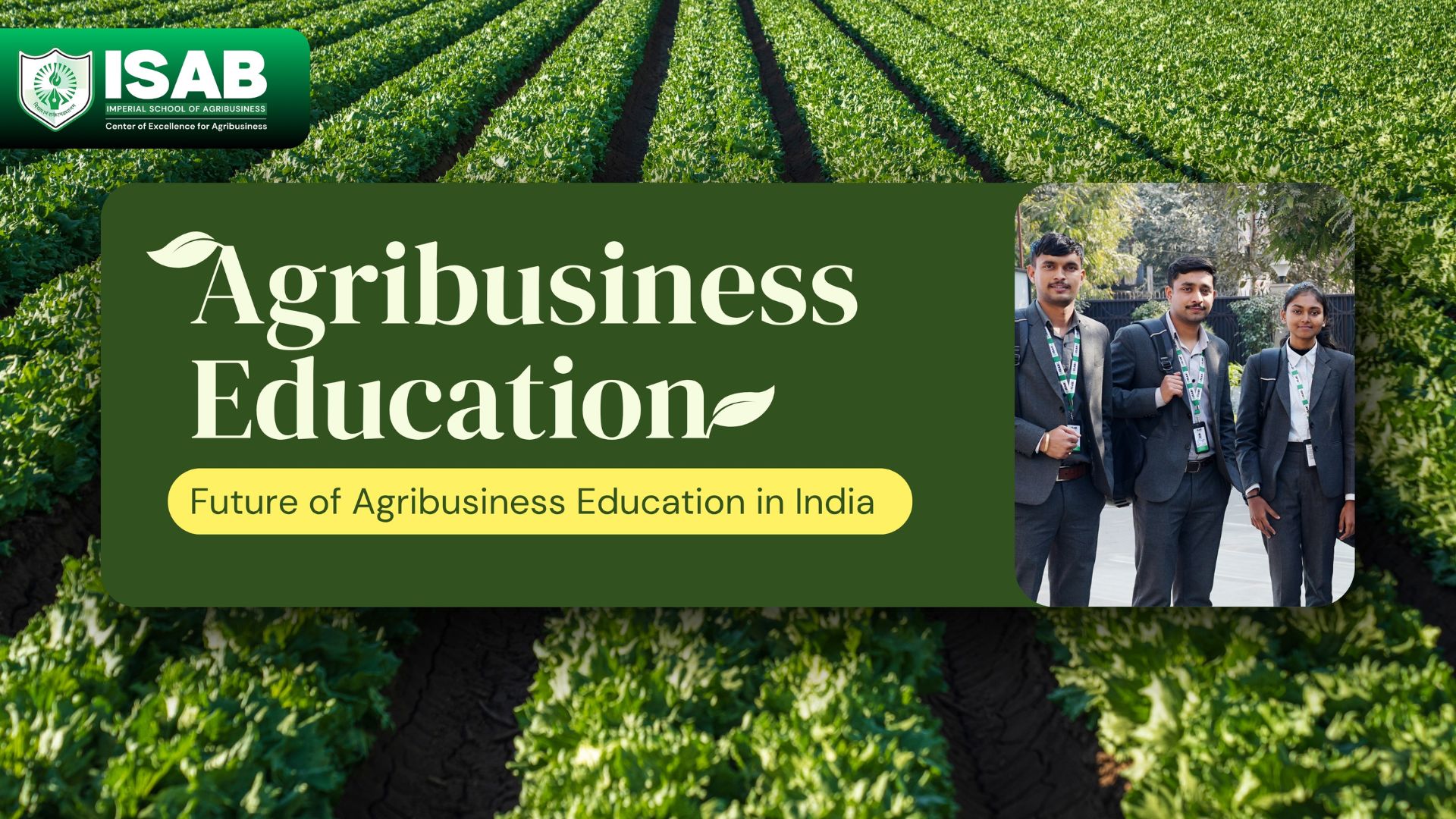
The agricultural system of India is undergoing significant change. The demand for skilled personnel has been increasing rapidly due to the growing demands of sustainable farming, advanced technology, food processing, and supply chain management. The result is that agribusiness education is undergoing changes that will equip students with the skills necessary to address the problems and opportunities of modern agriculture.
Colleges offering agribusiness management degrees are now emphasising hands-on experience, industry exposure, and technology-based solutions. Conventional notions of farming are no longer restricted to students. Rather, they are taught about agricultural marketing, finance, agritech innovations, food systems, and rural development.
Emerging Trends in Agribusiness Education
The integration of technology into agribusiness education is one of the largest trends. Artificial intelligence, data analytics, precision farming, and digital agriculture are becoming integral parts of the curriculum.
Another emerging trend is experiential learning. Field trips, industry projects, and interactions with agribusiness leaders are encouraged at many institutions today. This enables students to appreciate real-world business challenges and learn to solve problems in practice.
Why Is Agribusiness Management Gaining Popularity?
As agriculture has become a major contributor to food security and economic growth, agribusiness management is becoming a promising career. Students are beginning to understand that agriculture today involves much more than planting crops. It involves marketing, logistics, exports, finances, sustainability and entrepreneurship.
Industry estimates predict that India's agribusiness will continue to grow, driven by rising food demand, technological innovation, and government initiatives to promote agricultural development. This expansion is providing employment opportunities for skilled workers in various industries.
The importance of industry cooperation.
Effective partnerships are becoming a critical component of agribusiness education. Students gain exposure to current market practices through collaborations with Agritech Companies, Food Processing Companies, Agricultural Organisations, and Research Institutions.
These partnerships can also help shape curriculum development, aligning the skills taught with industry needs and future work requirements.
Equip Future Skills
Agribusiness professionals of the future will need technical know-how and business skills. New fields of application such as sustainability management, strategic planning, data interpretation, communication, and leadership are gaining ground.
Graduates will also be well-equipped to compete in the dynamic agribusiness environment if they understand and apply new and evolving technologies and consumer preferences in agriculture.
Career opportunities for graduates of agribusiness education
Agriculture business management graduates may be interested in positions in agricultural marketing, food processing, agricultural supply chain management, agricultural technology firms, rural banking, commodity trading, consulting, and entrepreneurship. With ongoing modernisation of the sector, there is a strong expectation of continued growth in demand for skilled professionals.
Conclusion
Innovation, technology, and industry engagement are key determinants in shaping the future of agribusiness education in India. Schools are making changes to their curriculum to better prepare students for a rapidly evolving agricultural economy. ISAB Greater Noida (Imperial School of Agribusiness) role in this dynamic environment is to promote academic education that is relevant to the future needs of the agribusiness industry.