



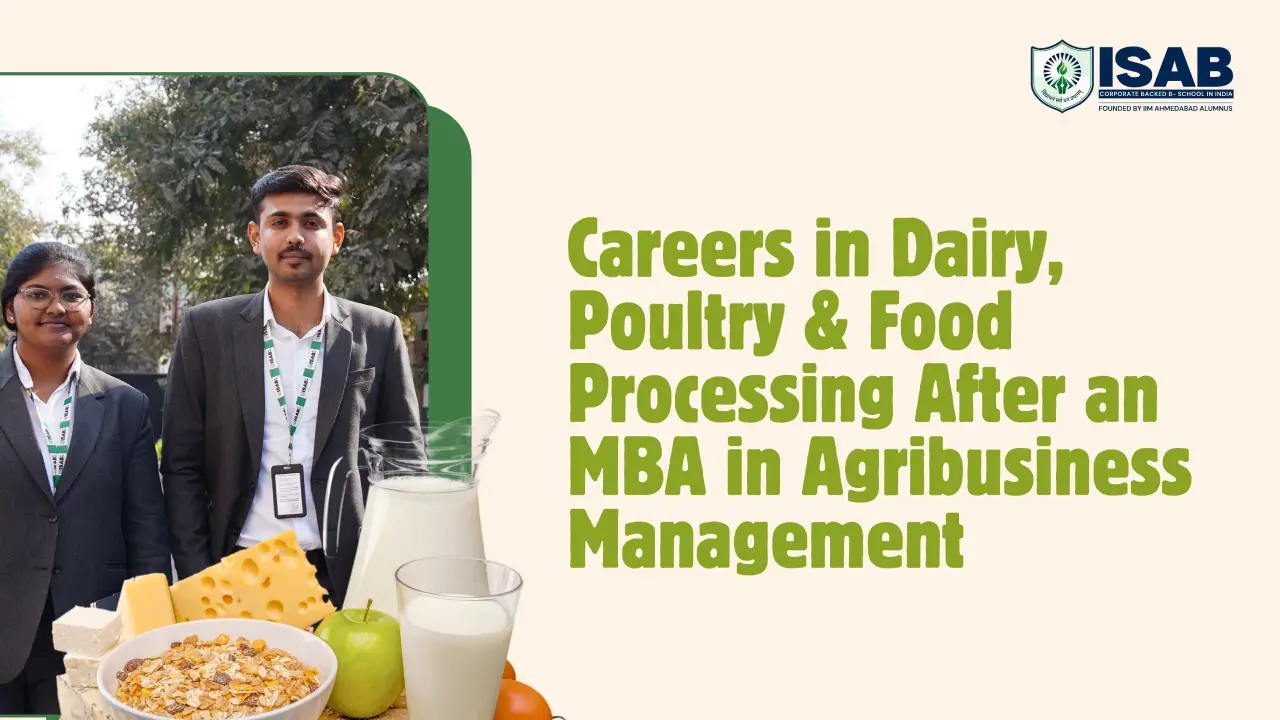
The agriculture sector is no longer limited to farming and traditional agricultural activities. With the growth of organised dairy, poultry businesses, food brands, cold-chain networks and food processing units, there is increasing demand for professionals who understand both agriculture and business. An MBA in food and agribusiness management can prepare students for careers across production, marketing, procurement, operations, supply chain and business development. From managing dairy products to overseeing poultry supply chains and food processing operations, graduates can explore diverse roles. Students researching the best ABM colleges in India such as Imperial School of Agribusiness should also consider industry exposure, practical learning, internships and placement opportunities while selecting a programme. With the right combination of management knowledge and sector understanding, agribusiness can offer several career paths in India's expanding food economy.
Career Opportunities After an MBA in Food and Agribusiness Management
An MBA in Agribusiness can open opportunities across several segments. Dairy, poultry and food processing companies require managers who can coordinate business operations while understanding agricultural supply chains.
1. Careers in Dairy Management
India has a large and diverse dairy sector, creating opportunities in procurement, production, sales and distribution. MBA graduates can work with dairy cooperatives, private dairy companies, food brands and milk processing businesses.
Common roles include:
Dairy Operations Manager
Procurement Manager
Supply Chain Executive
Dairy Product Marketing Manager
Business Development Manager
Quality and Production Coordinator
Professionals may manage milk procurement, vendor relationships, processing operations, product distribution and market expansion.
2. Opportunities in Poultry Companies
The poultry industry includes breeding, feed production, egg businesses, meat processing, distribution and retail. MBA graduates can contribute to the commercial and operational side of these businesses.
Potential positions include:
Poultry Business Manager
Supply Chain Manager
Procurement Executive
Sales and Marketing Manager
Feed Business Executive
Operations Manager
An understanding of demand forecasting, inventory management, pricing and distribution can be particularly useful in this sector.
Careers in Food Processing
Food processing is another major area for graduates of agribusiness management programmes. Companies involved in packaged foods, beverages, frozen products, grains, fruits and vegetables need professionals who can manage business operations efficiently.
Graduates may work in:
Roles such as Food Processing Manager, Operations Manager, Product Manager, Procurement Manager and Supply Chain Analyst can provide opportunities for career growth.
Why Choose Agribusiness Colleges in India?
Choosing the right institution can influence the practical and professional development of an MBA student. When comparing agribusiness colleges in India, students should look beyond rankings and examine the overall learning environment.
Important factors include:
Industry-oriented curriculum
Live projects and internships
Faculty experience
Rural and field exposure
Corporate interactions
Placement support
Alumni network
Specialisation options
Students comparing MBA agribusiness colleges can also check whether the programme provides opportunities to understand agricultural markets, food businesses, rural enterprises and supply-chain operations.
Skills Needed for Dairy, Poultry and Food Processing Careers
An MBA qualification provides management knowledge, but employers also value practical and analytical skills. Students should develop:
Supply chain management – Understanding procurement, logistics and distribution.
Data analysis – Using business data to support decisions.
Marketing skills – Understanding customers, products and market trends.
Financial understanding – Managing budgets, costs and profitability.
Communication – Coordinating effectively with farmers, vendors, employees and clients.
Problem-solving – Responding to operational and market challenges.
Internships and live projects can help students apply these skills before entering the workplace.
Career Growth and Salary Potential
Salary varies according to qualifications, experience, job role, organisation, location and industry segment. Entry-level professionals may begin in executive or management-trainee positions and progress towards roles such as Regional Manager, Supply Chain Manager, Category Manager, Business Development Head or Operations Head.
Career progression can also come through specialisation. For example, a graduate interested in logistics can develop expertise in supply chain management, while someone interested in food brands can build a career in product marketing or category management.
How to Choose the Right MBA Agribusiness College
Students searching for the top 10 agribusiness management colleges in India should evaluate colleges using practical criteria rather than relying only on rankings.
Consider:
Course curriculum and specialisations
Industry partnerships
Internship opportunities
Placement records and role profiles
Infrastructure and learning resources
Faculty expertise
Location and industry exposure
Overall programme value
The best ABM colleges in India for one student may differ from another depending on career goals, preferred specialisation and learning priorities.
Conclusion
An MBA in food and agribusiness management can lead to diverse careers in dairy, poultry, food processing, procurement, marketing, operations and supply chain management. As organised food businesses and agricultural value chains continue to evolve, professionals with both management and sector knowledge can explore opportunities across multiple functions. Students should compare agribusiness colleges in India carefully, considering curriculum, practical exposure, internships and career opportunities before choosing a programme. A well-planned MBA from ISAB (Imperial School of Agribusiness) can provide a strong foundation for building a management career in India's food and agriculture ecosystem.