




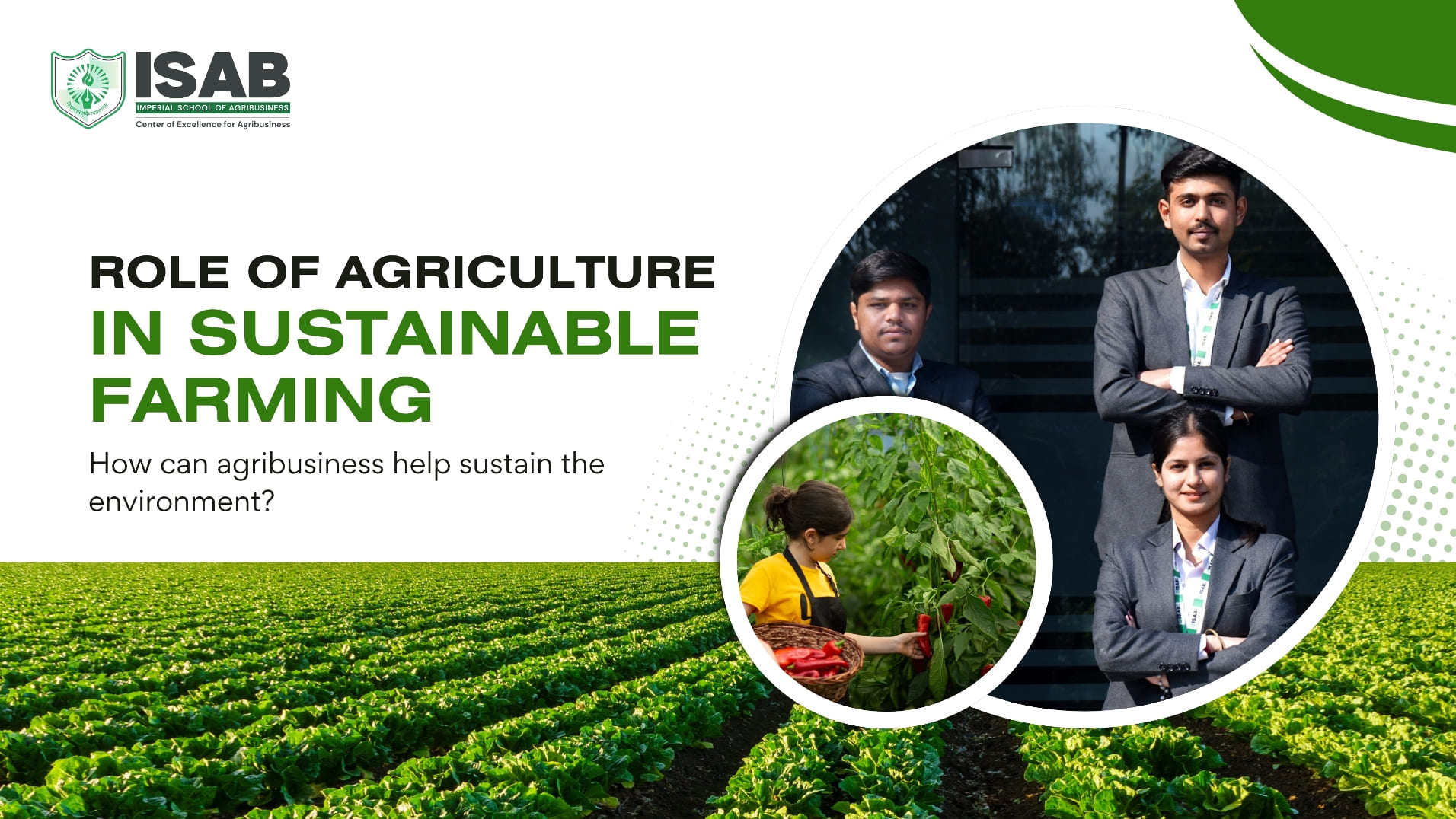
Modern farming is more than just crop production. In today's world, farmers must plan better, use more intelligent technology, market their produce well and follow environmentally-friendly methods to ensure agriculture's productivity for future generations. This is where agribusiness comes into its own. It links farming to business management, enabling farmers to boost productivity, whilst safeguarding natural resources. The students from agribusiness management colleges, agribusiness colleges in India, and agriculture MBA colleges in India are gaining the knowledge of making the agriculture sector stronger and more sustainable.
Understanding Sustainable Farming
Agriculture that is sustainable will be agriculture that does not compromise soil, water, forests, or biodiversity. It's about sustainability and the challenge of providing food for the present while still leaving adequate food for future generations. Farmers implement practices like crop rotation, organic manure applications, water management, integrated pest management (IPM), and responsible irrigation to maximize productivity while minimizing environmental impact.
These practices help to preserve natural resources and also lower the cost of farming and help in enhancing the farm incomes of the farming families in the long term.
How can agribusiness help sustain the environment?
Agribusiness involves the integration of the management, finance, marketing and technology aspects of agriculture. Agribusiness management college professionals provide training to Indian farmers to make better business decisions and promote environmentally sustainable farming practices.
They are involved in the improvement of supply chains, reduction of food waste, promotion of climate-smart agriculture, and direct market connection between farmers and markets. Post harvest losses are also minimised due to improved storage facilities and efficient transport systems which means farmers can make more money for their produce.
Technology and Rural Development
The importance of technology for sustainable farming. The use of mobile applications, satellite monitoring, soil testing, weather forecasting and precision farming enables farmers to optimise their water use, as well as their use of fertilisers and pesticides. This innovation not only benefits the quality of the crops but also helps to mitigate environmental impact.
Agribusiness experts also play a role in rural development through their initiatives in the training of farmers, advancement of farmer organizations, and provision of financial services. There are several agriculture MBA colleges in India that have an array of agriculture graduates working in the agriculture ministry, agri-tech firms, NGOs, as well as in food processing industries all looking to push for sustainable agriculture.
Developing Leaders in Agriculture
With agriculture being to deal with climate change and shifting consumer demands as well as constrained natural resources, skilled professionals are gaining in significance. The agribusiness colleges in India provide education and training in the areas of agriculture economics, food marketing, farm business management, supply chain management, and rural development. In Greater Noida, even students applying to ABM colleges can avail a leadership program for present-day agriculture.
Conclusion
Farmers are not the only ones who can achieve sustainable farming. It needs a combination of business, research, policy and professional knowledge of both agriculture and management. Schools such as ISAB Greater Noida (Imperial School of Agribusiness) play a vital role in shaping tomorrow's professionals ready to offer education, research, and practical experience in the field to promote sustainable agriculture.